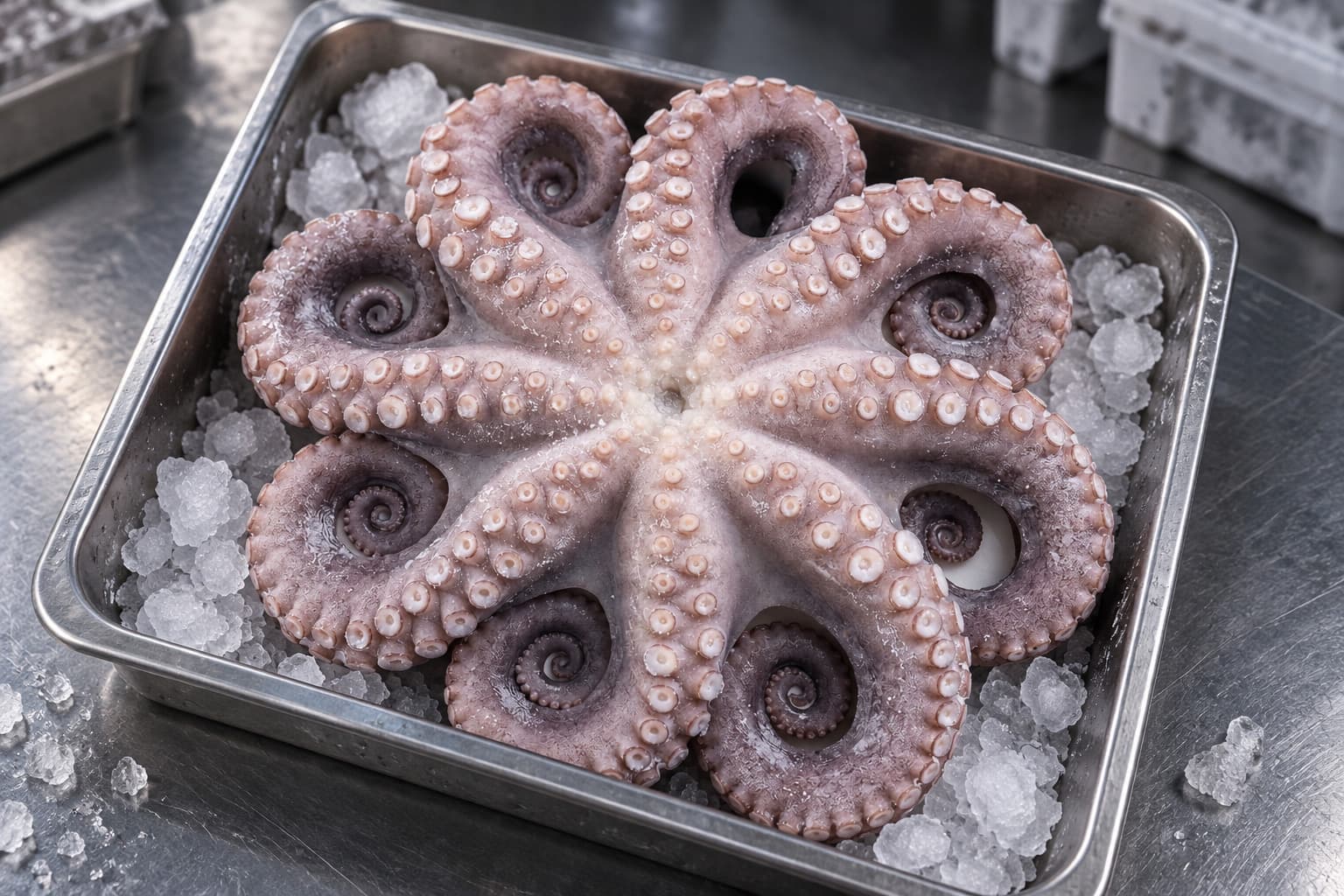
A buyer's guide to specifying frozen octopus without relying on vague grades or untested yield claims.
The species and presentation come first
Octopus is traded under common names that can cover different species. Put the scientific name and origin in the specification. For wild product, ask for the fishing area, landing point and catch documentation required by the destination market. Do not treat words such as sustainable or fully traceable as substitutes for documents.
State whether the product is whole round, gutted, cleaned, flower-cut, portioned or tentacles only. For cleaned product, list the status of viscera, beak and eyes. Small differences in preparation change both labour and usable weight.
Make the size grade measurable
A size code has little meaning without its unit and range. Ask whether the grade is based on grams per piece, kilograms per piece or pieces per carton. Record the acceptable tolerance and whether weight is measured before or after glaze.
Choose size around the intended dish or processing line. A wholesaler selling whole specimens may value visual consistency. A kitchen portioning tentacles may care more about arm thickness and cooked portion weight. These needs should be stated rather than inferred from a broad grade name.
Ask what happened before freezing
Confirm whether the octopus was frozen whole, cleaned before freezing or processed after thawing. Ask about tenderisation and request a complete ingredient statement. Water-retention treatments or other additives must meet destination rules and be declared where required.
Specify IQF or block freezing and the required storage condition. Glaze can protect frozen seafood from dehydration, but its weight is not seafood. Ask for declared glaze and net product weight excluding glaze. Keep the cold chain and shelf-life conditions from the approved product specification.
Treat yield as a test result
Yield changes with species, size, cleaning, glaze, thawing, cooking method and target doneness. A single universal percentage is not credible. Compare representative samples using one written procedure. Weigh the frozen pack, determine drained thawed weight, record cleaning loss, then cook equal portions by the same method.
The result can support menu costing or factory planning, but it belongs to the tested lot and method. Repeat checks when the species, size, processor or treatment changes.
Put the agreement on paper
The purchase specification should cover species, origin, presentation, grade, tolerance, ingredients, freezing, glaze, net weight, inner pack, carton, coding, shelf life and required certificates. The quotation should add quantity, MOQ, lead time, Incoterm, destination and loading plan.
Approve a representative sample when possible. A clear specification gives quality control something objective to inspect when the shipment arrives.
Confirm with the supplier
• Scientific species and origin
• Fishing area, gear and landing point
• Catch and health documents
• Whole, cleaned, portioned or tentacles
• Beak, eyes and viscera status
• Size range, unit and tolerance
• Tenderisation, additives and ingredients
• IQF or block
• Glaze and net weight
• Shelf life and cold chain
• MOQ, Incoterm and loading
Avalon Global Trade Team
Avalon Global's expert trade team has 10+ years of experience in seafood, coffee, and food product supply chain management across the Turkey-Malaysia trade corridor.