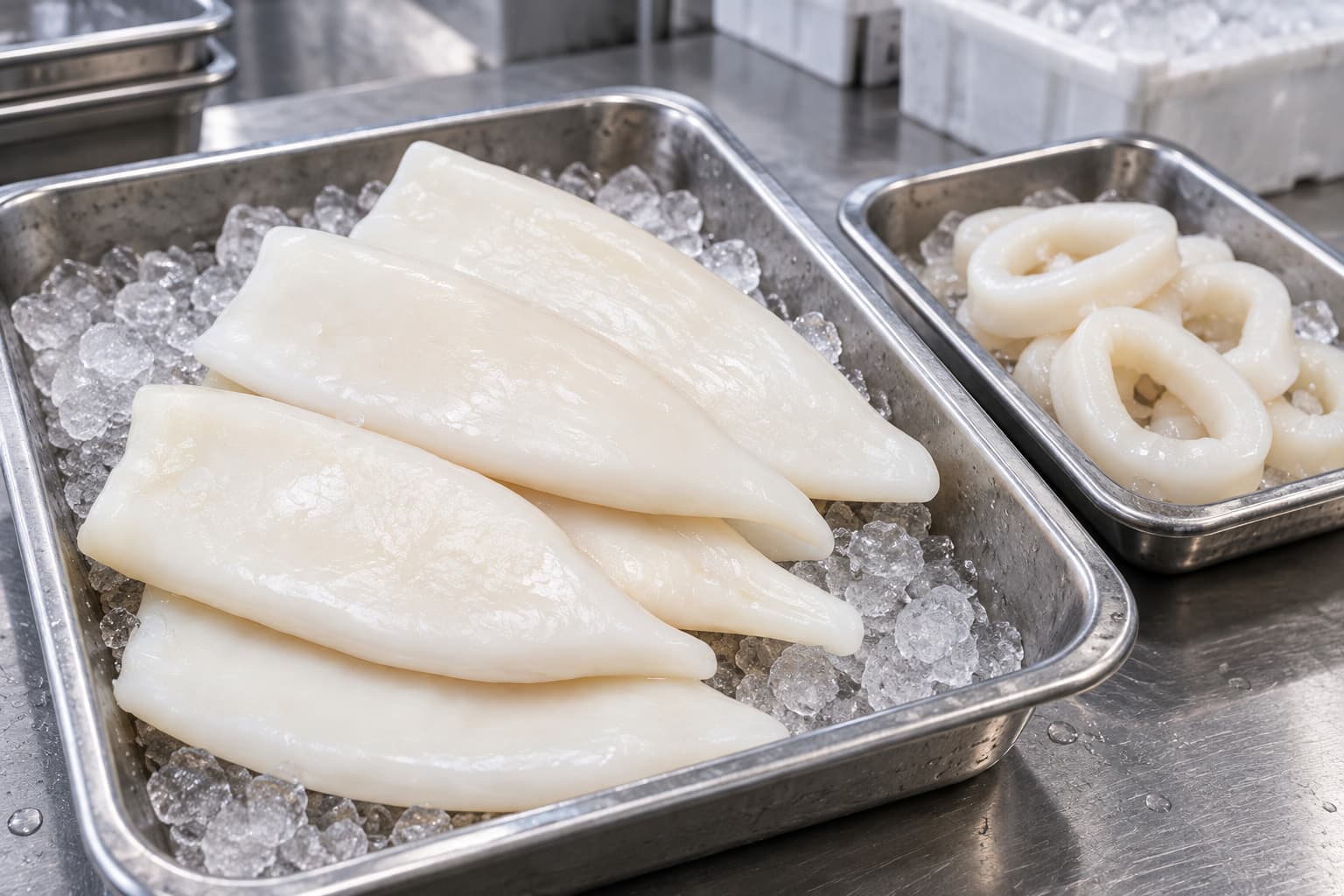
How format, cleaning, size and glaze change the usable yield and price of frozen squid.
Start with the intended use
A restaurant buying squid for fried rings needs a different specification from a processor cutting its own portions. Whole round squid usually requires the most preparation. Cleaned tubes reduce kitchen or factory work, while pre-cut rings offer portion consistency. Tentacles may be packed with tubes or sold separately.
The product name alone does not define what is inside the carton. A useful specification explains the species, retained parts, cleaning, cut, size and freezing method.
Understand the main formats
Whole round normally means the animal is frozen without cleaning. Whole cleaned should state whether the head, viscera, beak, eyes, skin, fins and cartilage have been removed. Tubes are the mantle after cleaning, but suppliers may differ on skin and fins. Rings should state thickness and whether they are cut from natural tubes or formed product.
Ask whether tentacles are included, attached or packed separately. If a menu needs both tubes and tentacles, buying only tubes changes portion design and cost.
Size and treatment affect performance
Squid grades can use weight per piece, tube length or pieces per kilogram. Put the unit in the RFQ and ask for tolerance. The right grade depends on ring diameter, plating and processing equipment.
Request a complete ingredient statement. Some products are treated to manage texture, colour or water retention. The treatment must be permitted in the destination market and declared where required. Compare samples after controlled thawing and cooking. Record drained weight, ring size, texture and cooking loss rather than relying on appearance while frozen.
Glaze protects product but is not product
Glaze is a protective coating of ice used to reduce dehydration during frozen storage. Ask for its declared percentage and the net squid weight excluding glaze. Codex guidance says glazed frozen fish products should be checked against compositional and package declarations, and additives present should be declared.
Also specify IQF or block frozen. IQF pieces are convenient for partial use. Blocks may suit processors using full cartons. Either can work when the format matches the operation and the cold chain is maintained.
Build a quote that can be tested
Request a product specification, label, recent analysis where relevant, packing details, shelf life and storage condition. State the quantity, destination and Incoterm. Approve a representative sample and keep the agreed checks in the purchase specification.
There is no universal best squid format. The best choice is the one that delivers the required portion with acceptable labour, cooking performance and net cost.
Confirm with the supplier
• Scientific species and origin
• Wild-caught or farmed
• Whole, cleaned, tube, ring or tentacle format
• Parts removed or retained
• Skin-on or skinless
• Size method and tolerance
• Ring thickness if applicable
• Ingredients and treatments
• IQF or block
• Glaze and net weight
• Shelf life, storage, MOQ and loading
Avalon Global Trade Team
Avalon Global's expert trade team has 10+ years of experience in seafood, coffee, and food product supply chain management across the Turkey-Malaysia trade corridor.